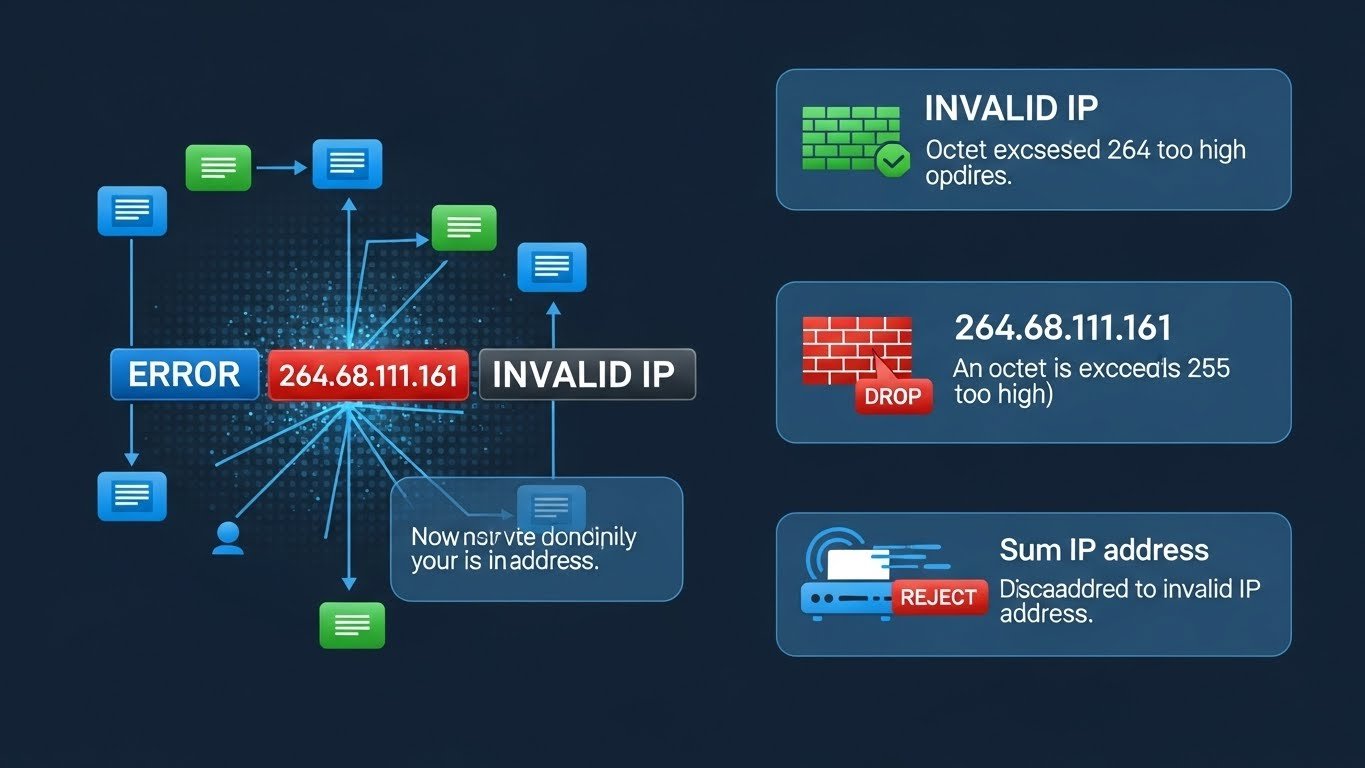
The keyword 264.68.111.161 appears to be a numerical IP-style address that often raises questions among users who encounter it in logs, tools, or technical discussions. While it may appear to be a standard IPv4 address at first glance, there are important technical details behind how such addresses function and why some of them behave differently than expected. Understanding 264.68.111.161 requires a basic grasp of IP addressing rules, networking standards, and common misconceptions that surround unfamiliar IP numbers.
Understanding IP Address Basics
An IPv4 address is made up of four numerical segments, called octets, each ranging from 0 to 255. These values are not random; they are strictly defined by internet standards. When people see an address like 264.68.111.161, it naturally draws attention because one octet exceeds the typical maximum value. This makes it an interesting case for learning how IP validation works and why certain addresses are considered invalid or reserved.
IP addresses exist to identify devices on a network. Every valid address points to a possible destination or source for data. When an address falls outside the allowed range, systems usually treat it differently, which can lead to confusion for non-technical users.
Is 264.68.111.161 a Valid IPv4 Address?
From a technical perspective, 264.68.111.161 is not a valid IPv4 address. The reason is simple: the first octet, 264, exceeds the maximum allowed value of 255. Because of this, no device on the public internet can legitimately use this address.
However, that does not mean 264.68.111.161 has no relevance at all. Invalid or out-of-range IP-like values are often used in documentation, testing environments, or as placeholders. Developers and educators sometimes rely on such values to demonstrate validation errors or to ensure that systems properly reject incorrect input.
Why You Might Encounter 264.68.111.161
There are several scenarios where 264.68.111.161 might appear. One common case is in software testing. Engineers may intentionally use an invalid IP to confirm that firewalls, forms, or scripts correctly detect errors. Another situation involves log files, where malformed input submitted by users or bots gets recorded exactly as entered.
In cybersecurity discussions, 264.68.111.161 might also show up as an example of suspicious or malformed traffic. Attackers sometimes send unusual values to probe how a system handles unexpected data. Seeing such an address in logs does not automatically mean a breach, but it does highlight the importance of strong input validation.
Common Misconceptions About Invalid IP Addresses
Many users assume that any four-part number separated by dots must lead somewhere on the internet. This is not the case. 264.68.111.161 looks realistic, but it cannot route traffic because it breaks IPv4 rules. Another misconception is that invalid IPs are always dangerous. In reality, they are often harmless artifacts of testing, typing mistakes, or automated scripts.
Understanding this distinction helps website owners and system administrators avoid unnecessary panic. When 264.68.111.161 appears, the correct response is usually to review validation logic rather than chase a non-existent server.
How Systems Handle Addresses Like 264.68.111.161
Modern operating systems and network tools are designed to reject invalid IPs such as 264.68.111.161. Web forms may throw an error, APIs may return a validation message, and firewalls typically drop packets that do not conform to standards.
For developers, handling cases like 264.68.111.161 gracefully is essential. Clear error messages improve user experience and reduce confusion. For security teams, logging these values can help identify malformed requests or automated scans without misclassifying them as legitimate traffic.
Educational Value of 264.68.111.161
Although 264.68.111.161 cannot function as a real network address, it still holds educational value. It serves as a practical example when teaching IP address ranges, validation rules, and the importance of standards. By analyzing why 264.68.111.161 fails, learners gain a deeper understanding of how IPv4 addressing truly works.
This kind of example also reinforces the need for accuracy in technical configurations. A single incorrect number can render an entire network setting useless.
Conclusion
The keyword 264.68.111.161 represents more than just a strange-looking number. It highlights the strict structure of IPv4 addressing and reminds users that not every IP-like value is valid or reachable. Whether encountered in testing, logs, or educational material, 264.68.111.161 is best understood as an example of how systems enforce standards and protect networks from incorrect data. Recognizing its purpose helps developers, administrators, and learners respond correctly and confidently.